
Health Inspection Coming Up Fast? Here's What Gets Checked Overhead and Behind Your Equipment
Heat and agitation reach what chemistry alone can't
Quick Answer: Inspectors check ceilings, ceiling tiles, vent covers, light fixtures, exhaust hood surfaces, and the walls and floors behind and under fixed equipment for grease film, dust buildup, mold, pest activity, and standing residue. These surfaces fall under physical facility cleanability standards that require smooth, nonabsorbent, easily cleanable finishes in food prep areas, and they get flagged just as often as anything on the cookline. A walkthrough that only covers counters and coolers misses the areas that actually generate the most citations.
You get the call from your health department, or you check the portal and see next week's date sitting there. Your first instinct is to walk the line: check the coolers, wipe the prep tables, make sure the handwash sinks are stocked. That instinct is right, but it's incomplete. An inspector doesn't stop at counter height. They tilt their head back before they ever look down.
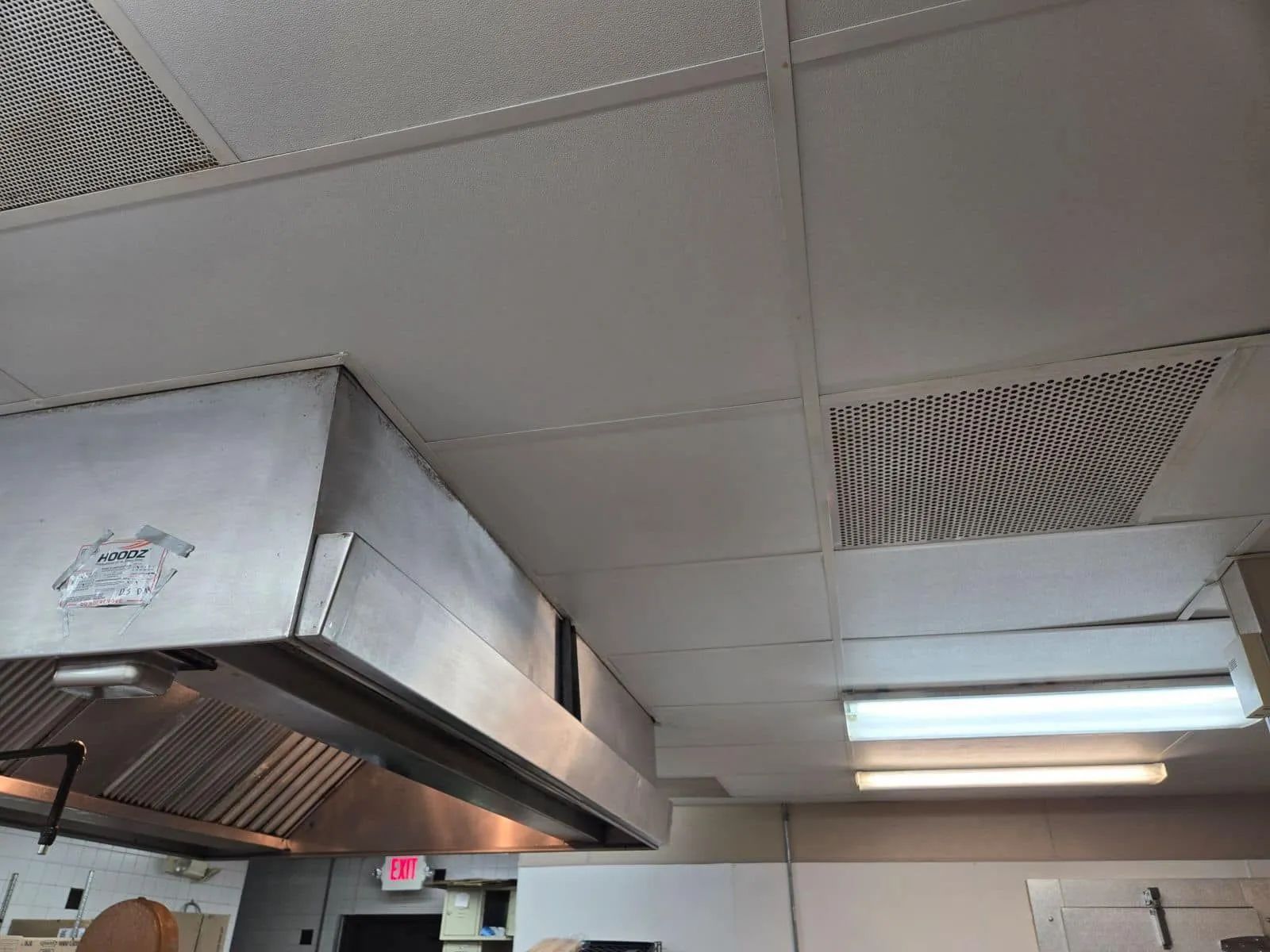
Ceiling tiles over the cookline. The underside of the exhaust hood. Vent covers rimmed in gray. Light fixtures dulled by a film you stopped noticing months ago. The gap behind the fryer where a mop has never reached. These are the spots that generate repeat citations, because daily cleaning routines are built around what staff can see and touch during a shift, not what sits six feet over their heads or eighteen inches behind a two-hundred-pound piece of equipment.
Why Overhead Surfaces Draw So Much Attention
Physical facility standards for food establishments require that floor, wall, and ceiling surfaces in food preparation areas be smooth, durable, and easily cleanable, and that any surface subject to moisture or grease be nonabsorbent. That standard doesn't stop at eye level. Wall and ceiling attachments, including light fixtures, vent covers, and mechanical ventilation components, are held to the same cleanability requirement, because grease and airborne particles settle wherever airflow carries them, and kitchen airflow moves up before it moves out.
What builds up overhead
Cooking oil vaporizes under heat and rises with the exhaust draw. A portion escapes the hood's capture zone and drifts onto the ceiling, onto tile grids, onto sprinkler heads and light lenses. Over weeks, that vapor cools and settles as a tacky film. Dust and kitchen humidity stick to the film, and what started as an invisible haze becomes a visible gray-brown coating that an inspector can see from the doorway.
Why it reads as a bigger problem than a dirty countertop
A greasy counter is a five-minute fix and reads as routine. A greasy ceiling tile signals a maintenance gap that's been building for a long stretch, because nobody wipes a ceiling during a Tuesday lunch rush. Inspectors know this, and they weigh it accordingly. Overhead grease accumulation is also tied directly to fire risk under most local fire codes, which means a citation here can trigger a second look from a different authority entirely.
The Behind-Equipment Zone Nobody Walks
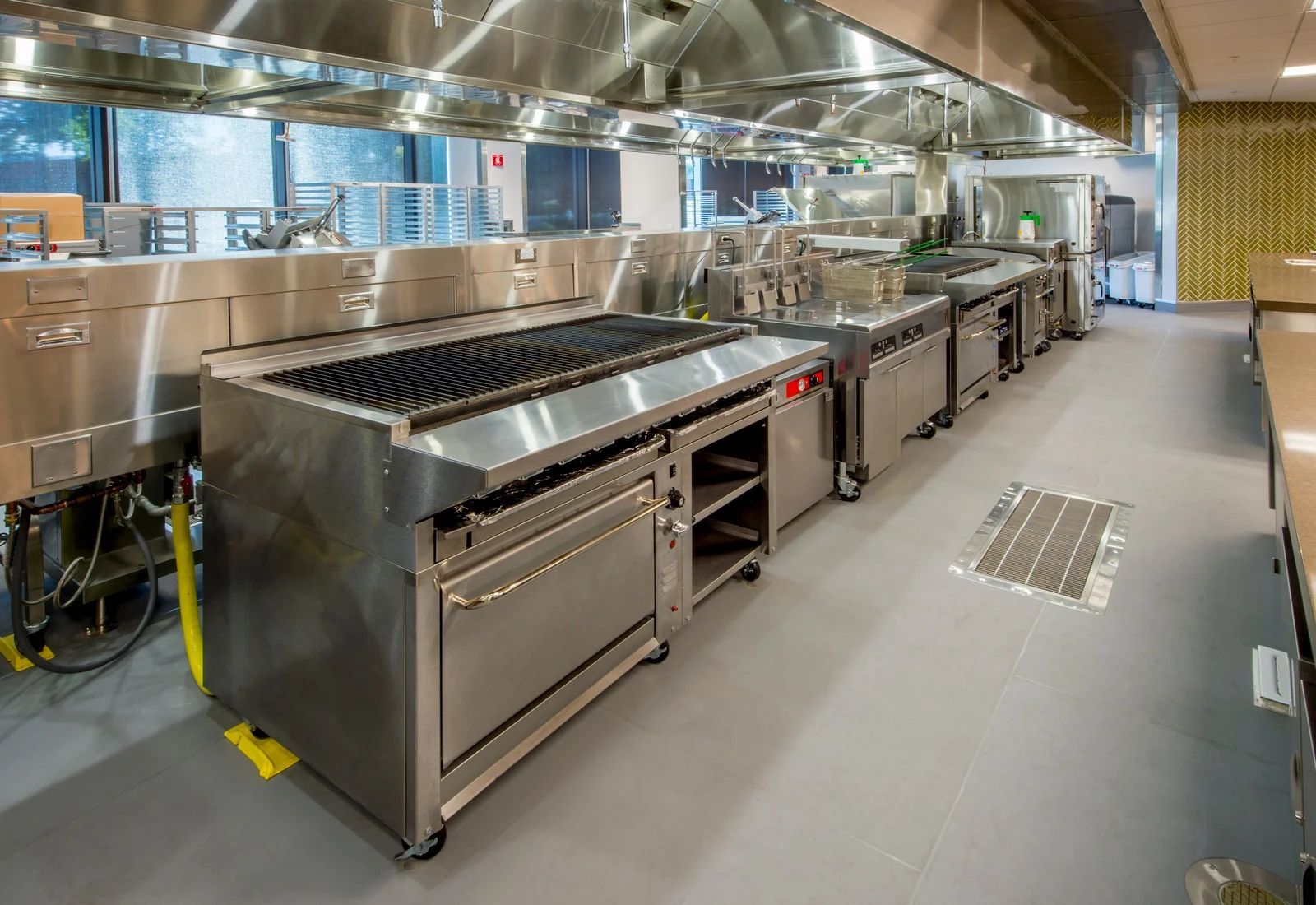
Move a reach-in cooler or a floor mixer six inches and you'll usually find a version of the same scene: a dark ring of dried spill, a scatter of dropped food debris, sometimes standing moisture with a sour smell. This zone gets missed for a simple reason. Cleaning behind fixed equipment means physically shifting something heavy, and most daily and even weekly cleaning schedules don't build in the time or manpower for it.
Why inspectors check it anyway
Standards for premises maintenance call for physical facilities to be cleaned as often as necessary to keep them clean, and for the premises to stay free of unnecessary items and litter. There's no carve-out for hard-to-reach zones. An inspector who's been doing this for years knows exactly where operators skip, and behind the line equipment is usually the first place they check because it's the fastest way to separate a kitchen that's genuinely maintained from one that only looks clean at counter height.
What tends to collect back there
Dried sauce splatter, breading crumbs, grease that traveled along a floor seam, and sometimes pest activity, since dark, undisturbed, food-adjacent space is exactly what pests look for. A single roach sighting or a trail of droppings behind a fryer can turn a routine inspection into a failed one regardless of how spotless the rest of the kitchen looks.
Ventilation and Ductwork: The Part You Can't See at All
Exhaust hoods get scheduled service because fire suppression compliance usually demands it, but the intake and exhaust ductwork that moves air through your kitchen is a separate concern. Ventilation systems are required to be designed and maintained so they don't become a source of contamination, and that includes keeping intake and exhaust ducts clean and filters changed so dust, grease, and debris don't recirculate back into food prep space.
A hood cleaning handles the visible surfaces and the flue. It doesn't always reach the horizontal duct runs above a drop ceiling, where grease can pool for years in a section nobody has opened. When an inspector spots a stained ceiling tile directly below a duct run, that's often the tell that prompts a closer look at what's happening above the tile line, not just on top of it.
Tip: Pull one ceiling tile near your hood system every few months and look up. If you see staining, sagging, or a wet sheen on the duct or the tile backside, that's your early signal to schedule a deeper overhead service before it becomes a visible ceiling stain an inspector can spot from across the room.
Grout, Floor Seams, and the Areas Mopping Skips
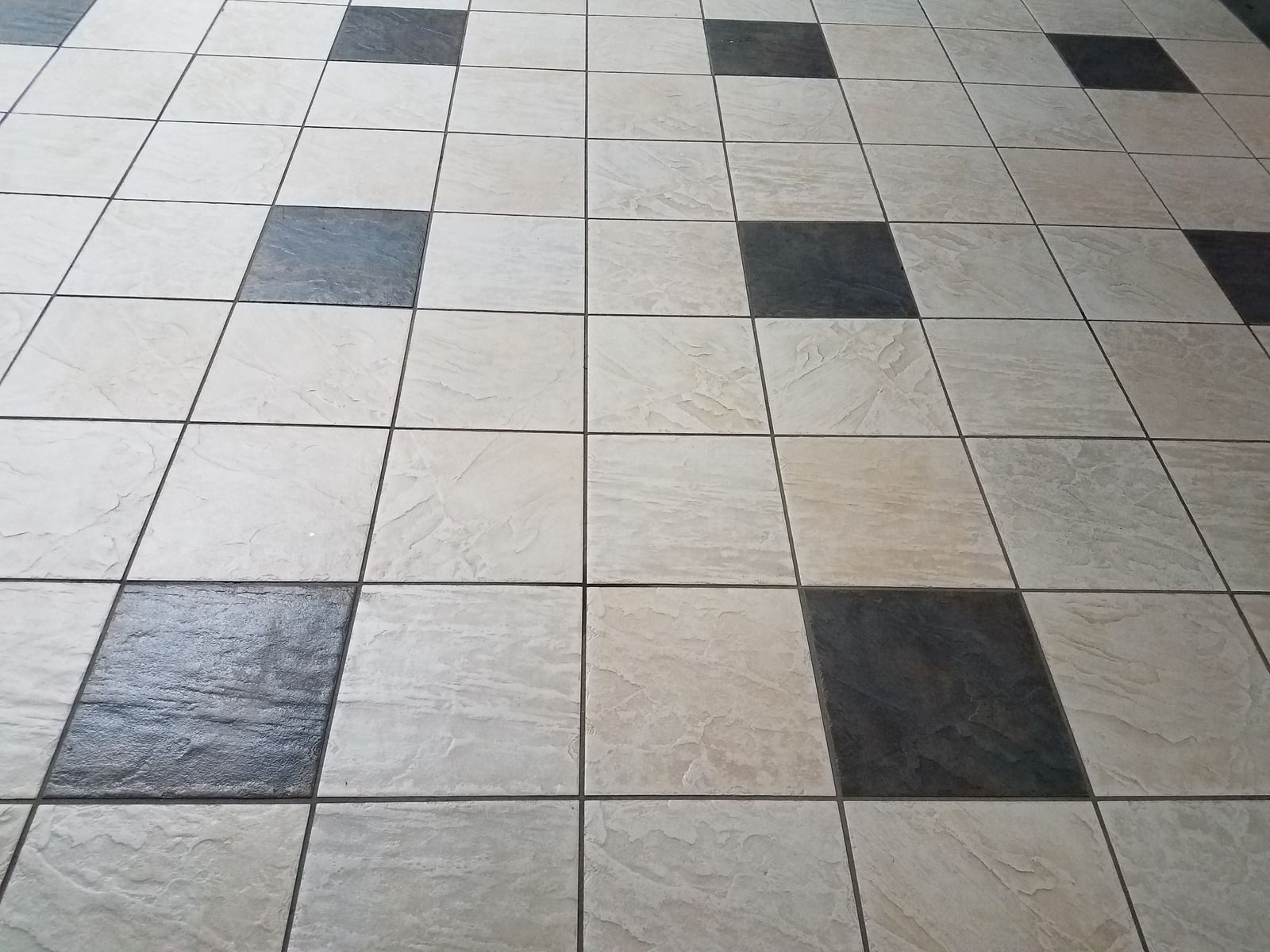
Mopping moves surface debris around; it doesn't lift grease that's worked its way into grout lines, floor-wall coving, or the recessed track under a walk-in door. Coving at the floor-wall juncture exists specifically because that seam is where liquid and grease collect, and the standard requires it to be sealed tight enough that residue can't accumulate underneath. When that seal breaks down, or when grease sits in the joint faster than routine mopping removes it, the buildup becomes visible as a dark line tracing every wall in the kitchen.
Where this shows up hardest
Under prep tables, along the base of cookline equipment, and in the corners behind trash cans, three zones a standard mop pass barely touches because furniture and equipment legs get in the way.
Warning:
Never let staff use degreasers or acidic cleaners on grout and coved seams without checking the manufacturer guidance first. Some of the stronger commercial degreasers used on cookline floors will break down grout sealant over repeated use, which turns a cleaning routine into a structural problem that costs far more to fix than the grease it was meant to remove.
Building a Cleaning Schedule That Actually Covers These Zones
Light Fixtures and the Sanitation Case Nobody Talks About
Heat and agitation reach what chemistry alone can't
Frequently Asked Questions
How often should ceiling tiles above a cookline actually be replaced versus cleaned?
Light grease film can usually be cleaned, while tiles with deep yellowing, persistent stains, or a spongy texture may require replacement. Inspecting ceiling tiles every few months helps identify saturation before it creates sanitation concerns.
Do inspectors actually move equipment during a walkthrough, or do they just look?
Inspection practices vary, but inspectors may ask staff to move equipment when buildup is suspected. They can also examine visible edges for grease, food debris, moisture, or pest evidence indicating sanitation problems underneath or behind units.
Is behind-equipment buildup treated as seriously as a food temperature violation?
These issues are generally evaluated differently, but buildup becomes more serious when associated with pests, standing moisture, or contamination risks. Minor dust may receive less attention, while neglected food residue can create significant sanitation concerns.
Can regular janitorial staff handle overhead and behind-equipment cleaning, or does it need to be separate?
Janitorial teams can handle routine surface cleaning, but overhead areas and spaces behind heavy equipment often require dedicated deep cleaning. Specialized tools, safe access, proper degreasers, and additional time help ensure these areas receive attention.
What's the fastest way to know if my kitchen has an overhead grease problem before an inspector points it out?
Look closely at ceiling tiles and surfaces directly above the cookline and hood. Visible sheen, dark streaks, sticky residue, or noticeable discoloration can indicate grease accumulation that routine cleaning is no longer adequately removing from surfaces.
Does behind-equipment cleaning need to happen even in kitchens with a strong daily cleaning culture?
Yes. Daily cleaning generally focuses on accessible surfaces, while heavy or fixed equipment rarely gets moved. Scheduling separate behind-equipment cleaning prevents grease, food debris, moisture, and pest-friendly residue from accumulating in these difficult-to-reach kitchen areas.
Keeping Every Kitchen Zone Inspection Ready
Health inspection readiness goes beyond sanitized counters and properly stored food. Overhead surfaces, ventilation components, floor seams, and spaces behind heavy equipment all reveal how consistently a commercial kitchen is maintained. Addressing these overlooked areas on a planned schedule helps prevent grease, moisture, debris, and pest activity from becoming larger sanitation concerns. Ceiling Clean International Inc. brings 45 years of experience serving commercial kitchens throughout Missouri and the wider Midwest, with an understanding of the areas routine cleaning often misses.